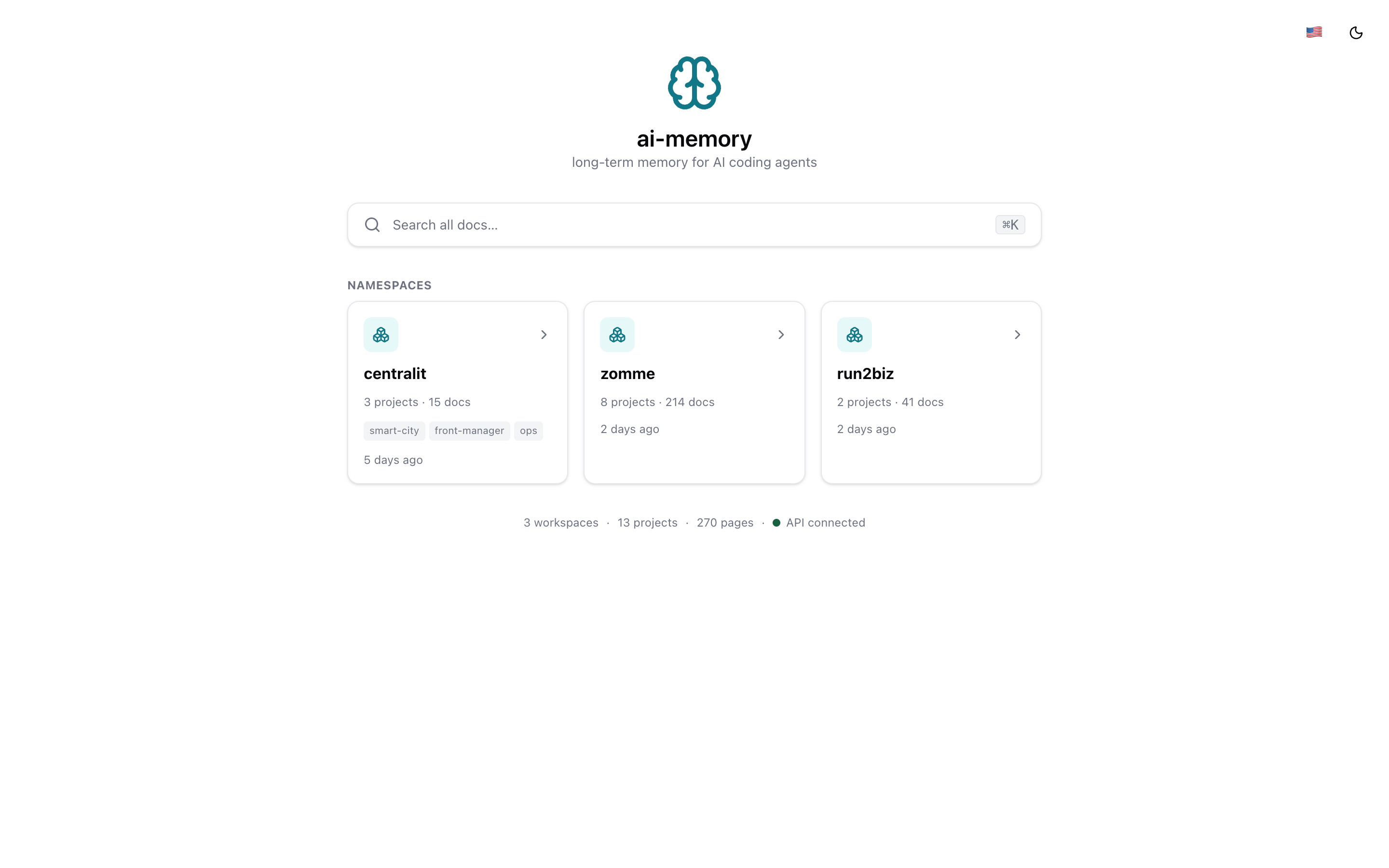
Agents write to memory all day. AI Memory UI is the window where humans get to read it. It is a custom frontend for ai-memory that turns an append-only memory store into a fast, browsable wiki — every page, every workspace, every cross-project link, in a single same-origin SPA.
Read-only by design
ai-memory is built for machines: agents talk to it over MCP and it quietly
accumulates everything they learn. The missing piece was a way for people to
see what is piling up. AI Memory UI is that piece — and nothing more. It is served
by the engine itself through --web-ui-dir and reads exclusively from the
/api/v1 JSON API; it never touches SQLite or the wiki files directly. MCP stays
for agents, /api/v1 is for browsers, and the UI can never corrupt what it shows.
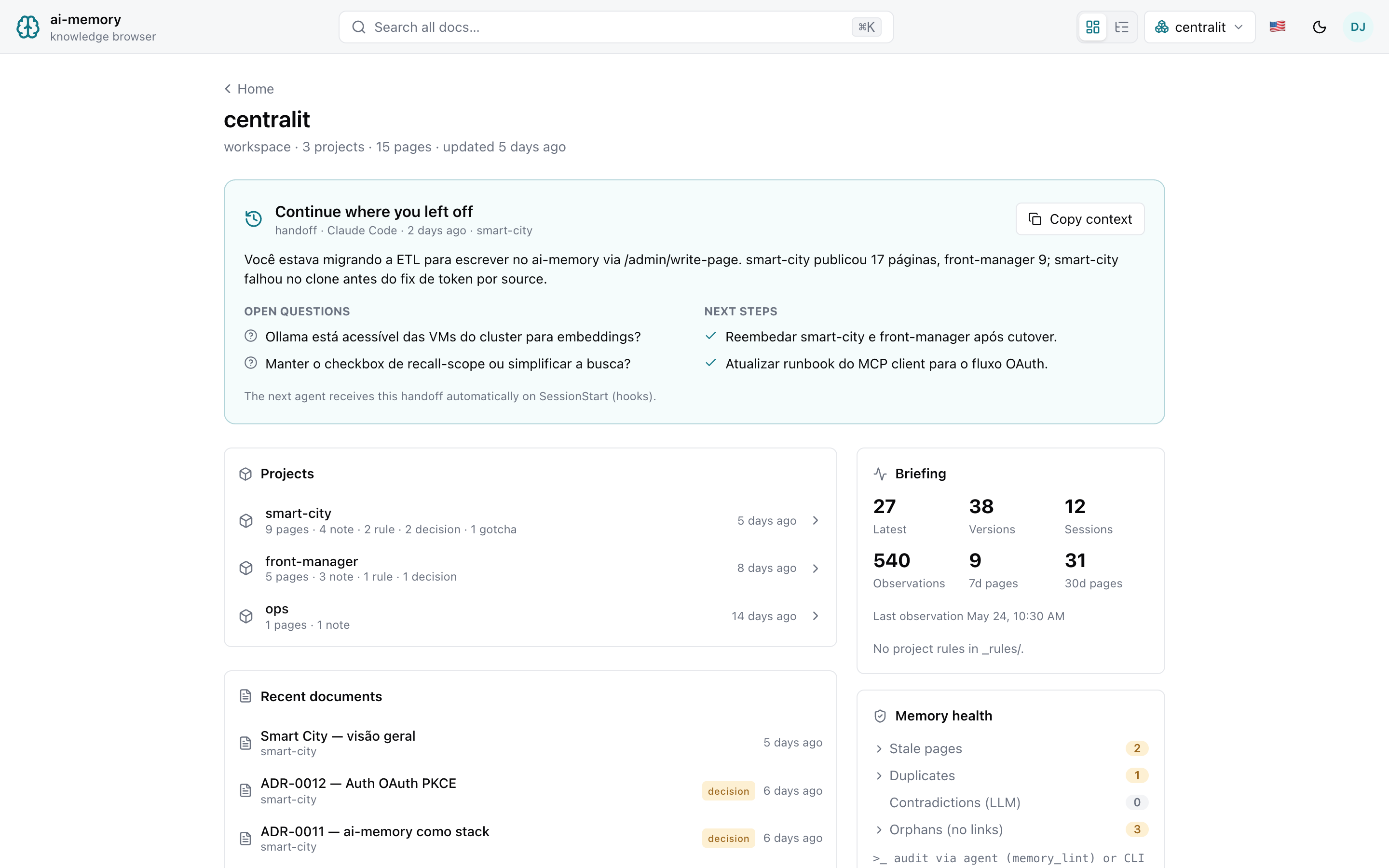
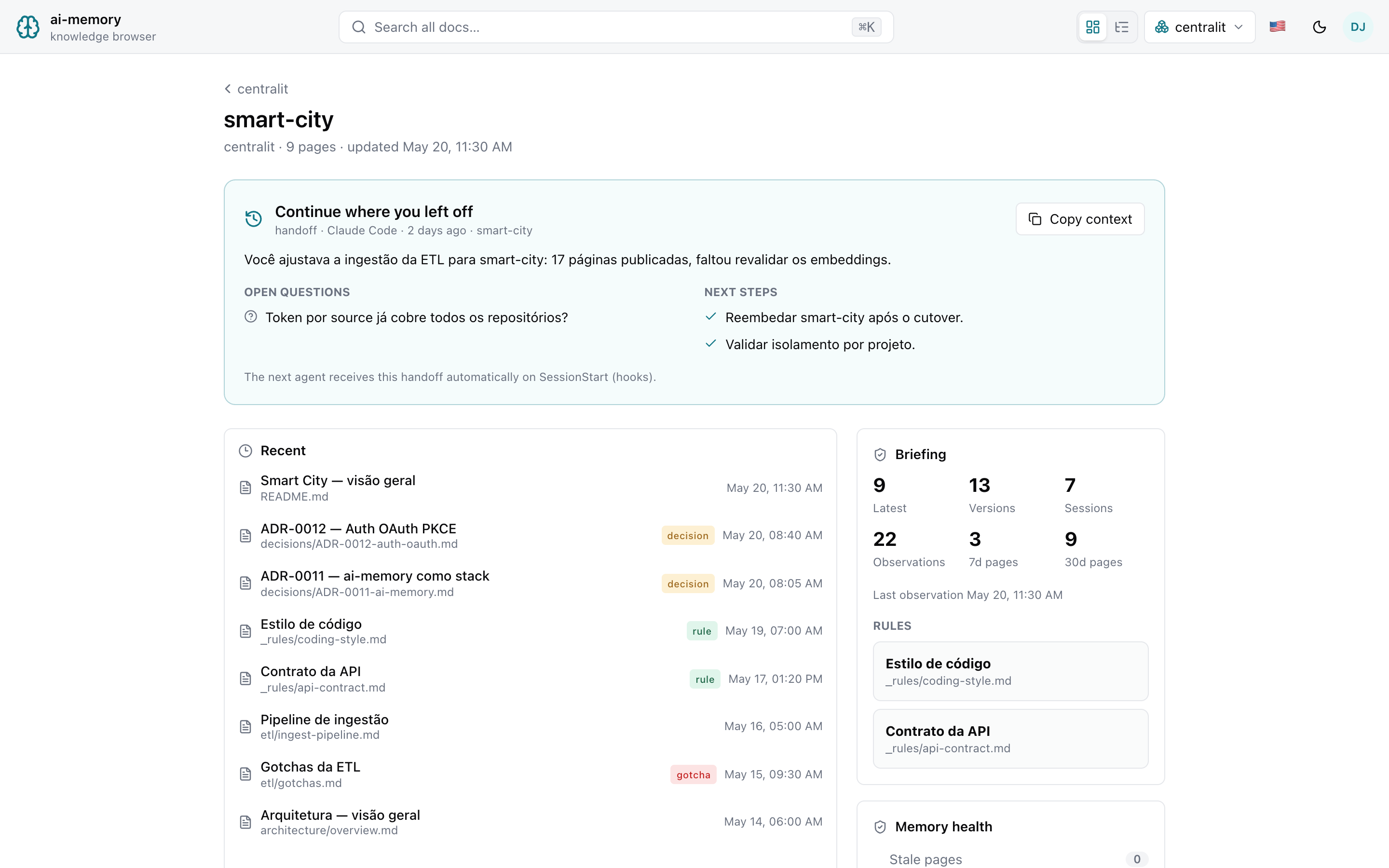
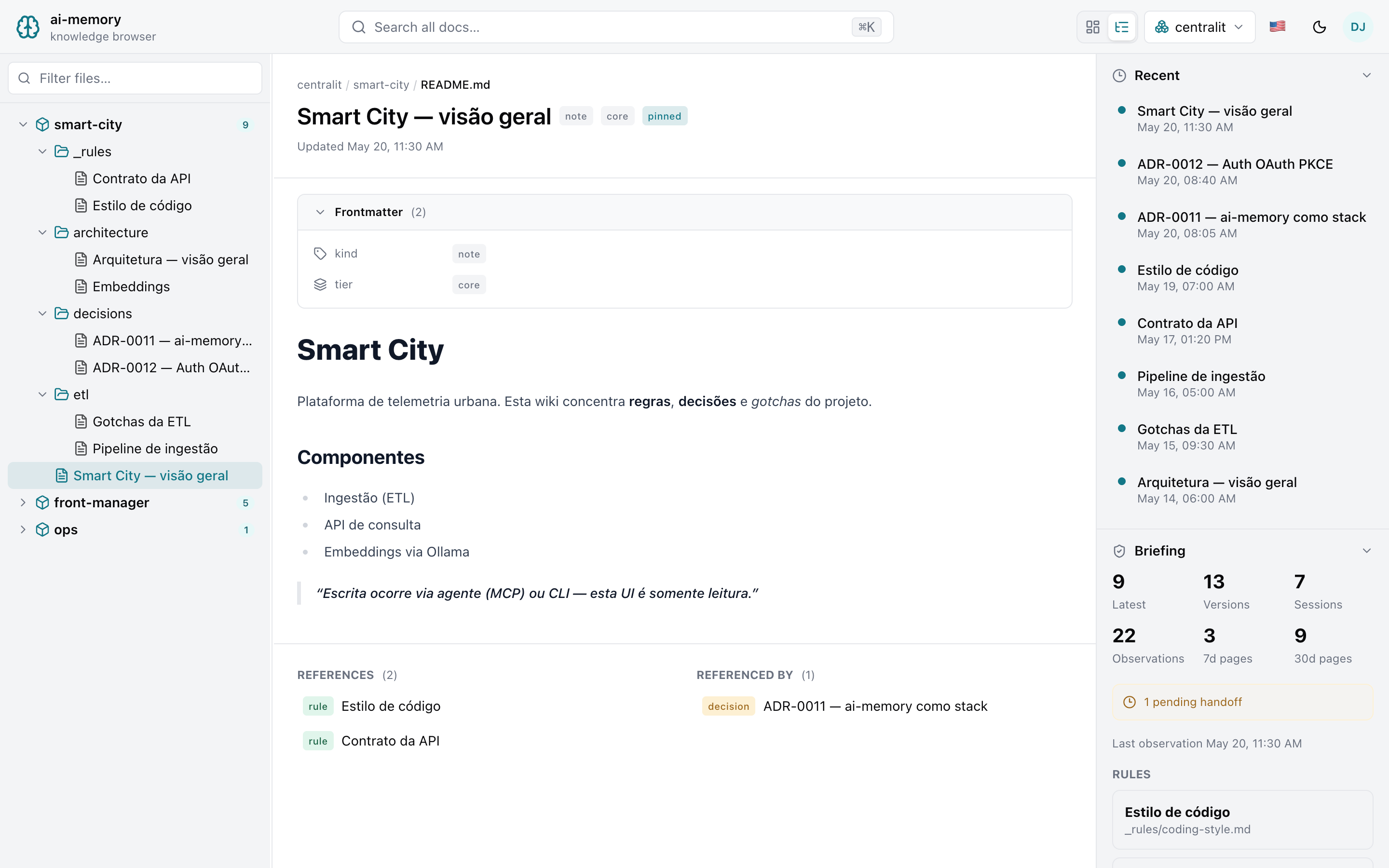
Browse the whole knowledge graph
Drill from a workspace, into a project, down to a single page — backlinks, tags and metadata included. What an agent recorded three sessions ago is two clicks away.
Search that respects scope
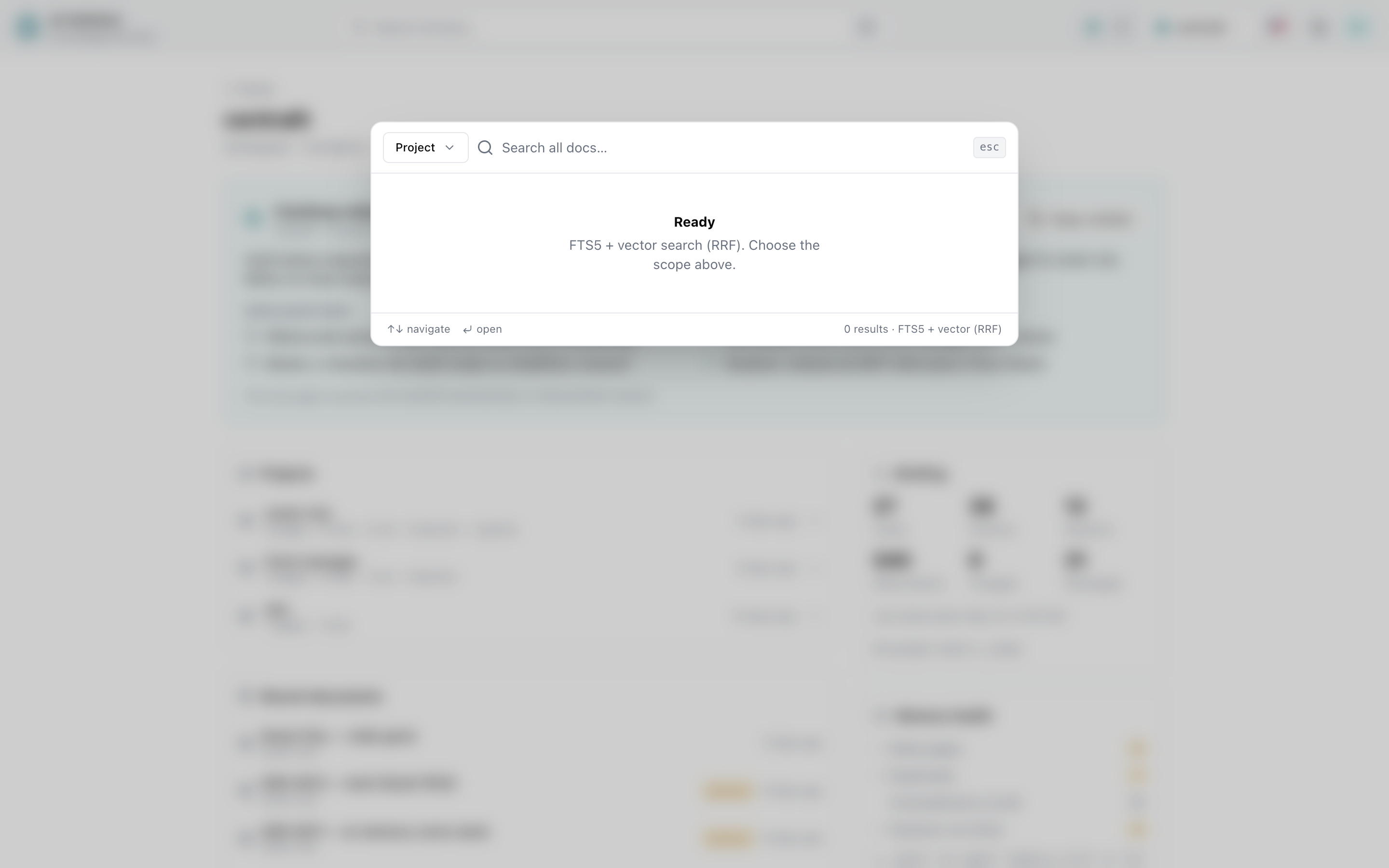
The UI follows ai-memory’s multi-workspace layout — each company or client can be its own workspace, while shared knowledge lives in separate ones. Search runs in three deliberate modes so recall is intentional, never a blind global sweep:
- Project — stay inside the scope you are working in.
- Selected — combine an explicit set of workspace/project scopes (e.g. a client’s product plus your shared practice notes).
- Global — sweep every latest page when you genuinely do not know where it lives.
Stack
SolidJS with TanStack Router (file-based) and TanStack Query, Tailwind CSS v4 and
Kobalte components, and i18n via inlang Paraglide (en / pt-BR / es). Header
name and tagline are build-time env vars, so it can be rebranded per deployment,
and an offline fixtures mode (VITE_FIXTURES=1) lets it run with no backend at all.
Availability
- Source: github.com/djalmajr/ai-memory-ui
- Related: AI Memory Ops — the Kubernetes packaging
Source-available; the ai-memory engine is licensed upstream.